
Deb King
Handwear and Maker
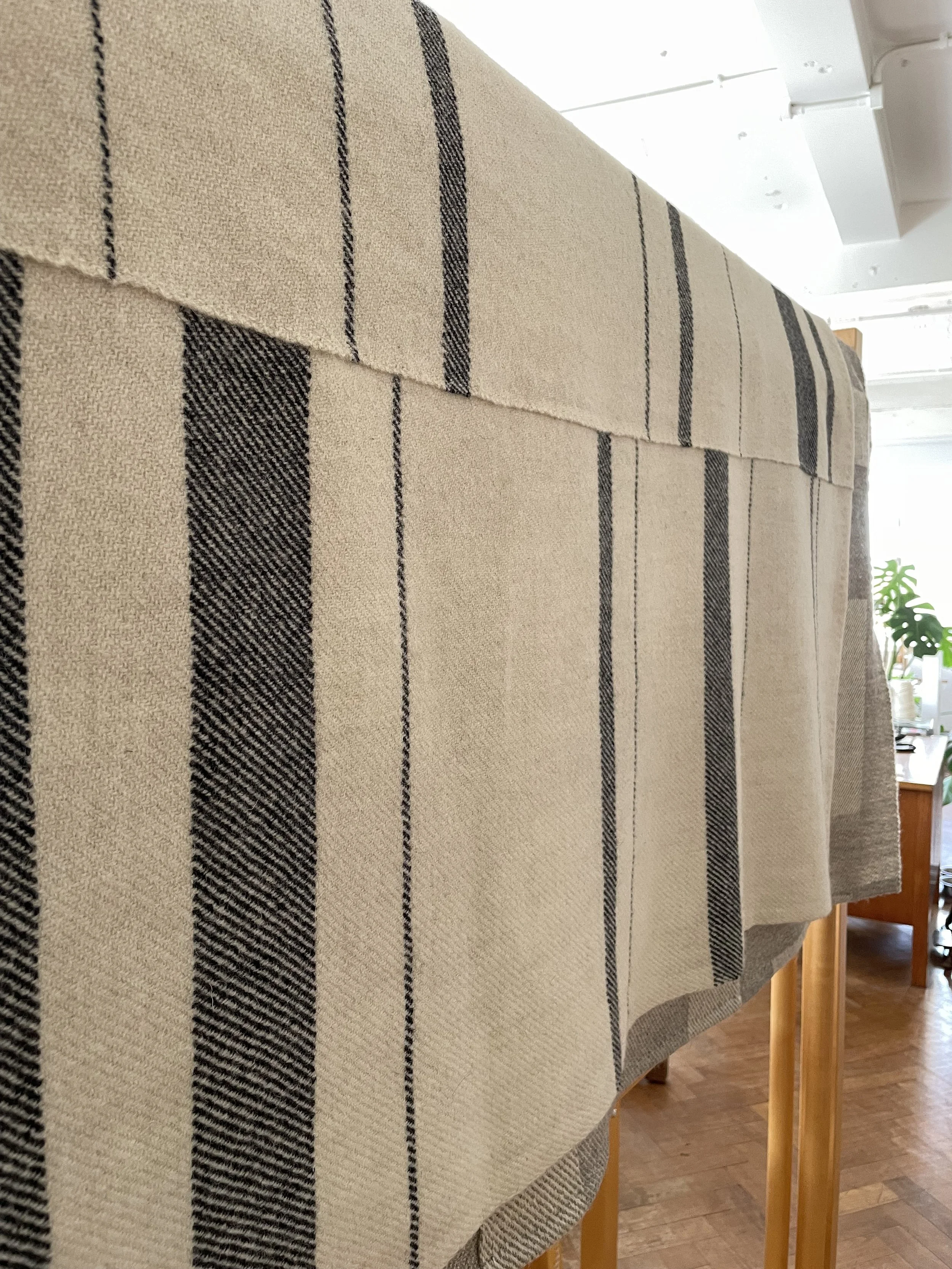
My studio specialises in handwoven and handstitched blankets and cushions mostly made from fully traceable British wool.
I make very small collections and prefer to make work to order or commission which helps to minimise stock holding and potential waste. I create everyday luxury pieces which have the potential to become heirlooms and each piece is unique. I’m fascinated by the transformation of fleece from the sheep I visit in the fields into yarn which I weave into cloth and then stitch into beautiful and useful homewares. British wool is a premium quality product which will last for years and I’m proud that my work is grown and processed by trusted experts from Cumbria to Cornwall before being woven and finished in my studio.
What is so amazing about working with British wool?
Each individual breed offers a range of natural colours and textures which are further influenced by cross breeding, husbandry, climate and many other factors, to produce a natural and renewable resource. My role is to support farmers and mills and make the best possible woven products to showcase this wonder-material but I also want to highlight the role of the material itself in the design and making processes and in the final pieces. The character of the sheep is often evident throughout the process and therefore in the cloth produced. Each fibre has a different feel, they move differently, some wools are robust and sturdy, some are soft and bouncy and others are more smooth and silky.
If any/ what have been your challenges with working with British wool and a local way of working?
Most of the British wool yarns available are produced for hand knitting and the range of DK and aran weight yarns, often dyed, is certainly increasing. Thankfully there are some undyed heavy 4 ply yarns designed for hand knitting or machine knitting, sometimes in larger quantities on cones but very few options are fine and strong enough for my work and most are not grown and processed in the UK and/ or traceable back to the farm.
What weaving looms do you use and how many do you have?
I weave on a 16-shaft table loom, it’s compact which is important in a small studio and it enables me to minimise yarn waste which can be considerable on a larger loom. I also have a growing collection of 8 shaft table looms which students use in our weekly classes and occasional workshops.
Do you finish onsite? If not, is it convenient or what would be your ideal situation?
I do everything myself onsite. Each piece I make is individual in terms of design and often material, so doing the finishing myself is the best approach. One of the beauties of using local British wools is that they all have slightly different properties but this does mean that the washing, drying and pressing processes have to be carefully managed to ensure I produce the best possible cloth from each yarn.
Do you find a lot of push back in the industry in terms of working with British wool?
Some potential customers believe that British wool is itchy and scratchy and only good for carpets and insulation. Most are surprised when they feel the different qualities of cloth woven from different breeds and find that they prefer the bounce of Romney or the silkiness of a lustre yarn, but this is only possible when they can handle the cloth.
Do you find that customers are becoming more interested in British wool?
Most of my customers are drawn to the textures and tones of undyed British wool and appreciate that it’s a premium quality product. They’re particularly interested in the story telling aspect and supporting individual farmers and mills, they love seeing photos of the farms and the sheep and are intrigued by the different breeds. However, they’re also aware that it isn’t accessible to everyone and some aren’t able to buy into handmade products because of price. Other customers prefer the more familiar consistency and colour options offered by dyed commercial yarns, British yarns in this category aren’t widely available but do provide a bridge for those who prefer more vibrant colour options.
On a scale of 1- 10 (1 being the lowest and 10 excellent) how much do you think your business has improved in the below areas as a result of good working practices and environmental standards?
Waste production (off-cuts, production) – 10
Plastic pollution (packaging) – 9
Water wastage (finishing and dyeing) – 8
Energy consumption (shipping, machinery) – 9
Do you have any hero farmers or people in your supply chain you would like to highlight?
I work with several small farms and a micro mill who all quietly do brilliant work. I also source yarn from The Wool Library and Fernhill Farm - both can be found on the GBWR map.